



 From the Editor
In March 2025, the Institute of History of the Siberian Branch of the Russian Academy of Sciences hosted an All-Russian Scientific and Practical Conference on the History of Siberian Cities in Modern Times, with international participation, dedicated to the 80th anniversary of the birth of Dmitry Yakovlevich Rezun (1945−2012), a renowned scholar, Doctor of Historical Sciences, Professor, and expert in Siberian urban studies). This thematic issue of the journal is primarily composed of articles based on the presentations that were made at the time. The relevance of studying the history of Siberian cities is determined by their leading role in the socio-economic and cultural development of Asian Russia, but unfortunately, in recent years, there has been a noticeable trend towards narrowing the chronological scope of research in this area, with fewer publications focusing on the 17th and 18th centuries. When preparing the issue, the goal was to overcome this imbalance as much as possible. Readers can judge the extent to which this was achieved.
 D.Ya. Rezun: Biography and Scientific Heritage
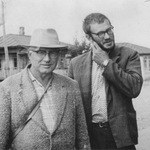
I.P. Kamenetsky
The Path to Science of Dmitry Yakovlevich Rezun (Unknown Pages in the Life of a Historian)
The article is dedicated to the memory of Doctor of Historical Sciences, Professor Dmitry Yakovlevich Rezun (1945−2012). Based on the scientist’s typewritten memoirs, which are being introduced into scientific circulation for the first time, as well as his reports on historical and architectural expeditions, the article highlights lesser-known aspects of his biography, including his childhood and student years, teaching at a secondary school, fieldwork, and his interactions with prominent scholars. It is concluded that D.Ya. Rezun’s entry into “big” science was the result of his persistent and purposeful work in achieving his dream.
The article was made on the topic of the state assignment “Siberian Society as a Factor in the Territorial Growth and Unity of Russia (Late 16th − Early 20th Centuries)” (FWZM-2024-0007).
Publishing: 28/02/2026
How to cite: Kamenetsky I.P. The Path to Science of Dmitry Yakovlevich Rezun (Unknown Pages in the Life of a Historian) // Historical Courier, 2026, No. 1 (45), pp. 12−27. [Available online: http://istkurier.ru/data/2026/ISTKURIER-2026-1-01.pdf]
 D.Ya. Rezun: Biography and Scientific Heritage
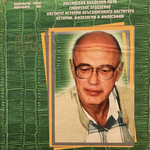
S.G. Petrov
Remembering Dmitry Yakovlevich Rezun
The article examines individual aspects of the educational and pedagogical activities of the famous Siberian historian D.Ya. Rezun (1945−2012). The books on Siberian history prepared by him and published for the general reader are presented. Particular attention is paid to the dedicatory inscriptions of D.Ya. Rezun on books and his oral stories, their analysis as a source for the history of academic historical science in Siberia.
The article was made on the topic of the state assignment “The Past in the Manuscript Sources of the 16th−20th Centuries: Preservation and Development of Traditions” (FWZM-2024-0006).
Publishing: 28/02/2026
How to cite: Petrov S.G. Remembering Dmitry Yakovlevich Rezun // Historical Courier, 2026, No. 1 (45), pp. 28−37. [Available online: http://istkurier.ru/data/2026/ISTKURIER-2026-1-02.pdf]
 D.Ya. Rezun: Biography and Scientific Heritage
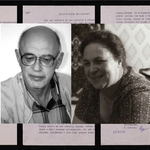
N.P. Matkhanova
D.Ya. Rezun’s Letters to E.V. Chistyakova as a Historiographical Source
This article delves into the significance of the correspondence between the esteemed historian and historiographer D.Ya. Rezun and the outstanding medievalist scholar E.V. Chistyakova, considering its value as a historiographical source. The study highlights key elements of D.Ya. Rezun’s academic biography and investigates particular aspects of his creative methodology. Furthermore, it examines Rezun’s perspective on the importance of his contributions to Miller Studies. The article elucidates the reasons behind the conflict between D.Ya. Rezun and O.N. Vilkov. In conclusion, it asserts that these letters are vital for understanding the scholar’s research practices and the academic context of his era.
The article was made on the topic of the state assignment “The Past in the Manuscript Sources of the 16th−20th Centuries: Preservation and Development of Traditions” (FWZM-2024-0006).
Publishing: 28/02/2026
How to cite: Matkhanova N.P. D.Ya. Rezun’s Letters to E.V. Chistyakova as a Historiographical Source // Historical Courier, 2026, No. 1 (45), pp. 38−46. [Available online: http://istkurier.ru/data/2026/ISTKURIER-2026-1-03.pdf]
 D.Ya. Rezun: Biography and Scientific Heritage
E.V. Komleva
D.Ya. Rezun’s Archive at the Institute of History of the Siberian Branch of the Russian Academy of Sciences
The article provides an overview of the materials stored at the Institute of History of the Siberian Branch of the Russian Academy of Sciences, which were collected by Dmitry Yakovlevich Rezun (1945–2012), a renowned scholar and expert on the history and historiography of the 17th – 18th century Siberian city. These materials include notebooks with extracts from books, photocopies of archival documents, card files of Siberian officials and settlements, Siberian studies literature, and documentation from three research departments of the Institute of History, Philology, and Philosophy of the USSR Academy of Sciences in the 1970s and 1980s.
The article was made on the topic of the state assignment “Siberian Society as a Factor in the Territorial Growth and Unity of Russia (Late 16th − Early 20th Centuries)” (FWZM-2024-0007).
Publishing: 28/02/2026
How to cite: Komleva E.V. D.Ya. Rezun’s Archive at the Institute of History of the Siberian Branch of the Russian Academy of Sciences // Historical Courier, 2026, No. 1 (45), pp. 47–60. [Available online: http://istkurier.ru/data/2026/ISTKURIER-2026-1-04.pdf]
 Social Structure of the a Siberian City
E.V. Leontyev
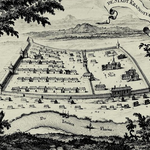
On the Demographics and Social Structure of the City of Krasnoyarsk’s Service People Based on the 1719−1722 Census Data
Based on the processing of mass population census data, the article examines how the growth of the number of service people in the city of Krasnoyarsk in the late 17th and early 18th centuries affected the social structure of the city and the recruitment of the local garrison. The article analyzes the following aspects: the timing of the recruitment of service people; the formation of the category of non-recruited householders; the shortage of service positions and the distribution of Cossacks by status; the age composition of service people; their migration.
Publishing: 28/02/2026
How to cite: Leontyev E.V. On the Demographics and Social Structure of the City of Krasnoyarsk’s Service People Based on the 1719−1722 Census Data // Historical Courier, 2026, No. 1 (45), pp. 61–68. [Available online: http://istkurier.ru/data/2026/ISTKURIER-2026-1-05.pdf]
 Social Structure of the a Siberian City
N.P. Gulyaeva
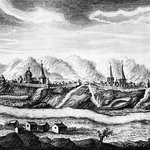
Comparison of the Structure of Families of Urban and Rural Residents Based on the Materials of the Confessional Records of the Krasnoyarsk Deanery of 1785
The structure of families is analyzed based on the confessional records of the Krasnoyarsk Deanery of 1785. The city of Krasnoyarsk, the residents of the suburban village of Ovsyanka, and the village of Yukseevo, which are the most remote from the city within the territory of the Deanery, are compared. There are no fundamental differences in the structure and proportions of family types, except that the diversity of variants decreases along the Krasnoyarsk−Ovsyanka−Yukseevo vector.
Publishing: 28/02/2026
How to cite: Gulyaeva N.P. Comparison of the Structure of Families of Urban and Rural Residents Based on the Materials of the Confessional Records of the Krasnoyarsk Deanery of 1785 // Historical Courier, 2026, No. 1 (45), pp. 69−82. [Available online: http://istkurier.ru/data/2026/ISTKURIER-2026-1-06.pdf]
 Social Structure of the a Siberian City
T.A. Kiskidosova
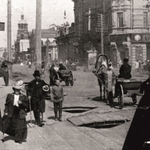
Confessional and Ethnic Structure of the Population in the Regional Centers of Eastern Siberia in the Second Half of the 19th Century
The article examines the ethnic and confessional composition of the population of Krasnoyarsk, Irkutsk, Chita, and Yakutsk in the second half of the 19th century. Despite the fact that the majority of urban residents were Orthodox, the number and proportion of other religious groups gradually increased. In addition to Russians, representatives of various nationalities were harmoniously integrated into the ethnic structure.
Publishing: 28/02/2026
How to cite: Kiskidosova T.A. Confessional and Ethnic Structure of the Population in the Regional Centers of Eastern Siberia in the Second Half of the 19th Century // Historical Courier, 2026, No. 1 (45), pp. 83−100. [Available online: http://istkurier.ru/data/2026/ISTKURIER-2026-1-07.pdf]
 Social Structure of the a Siberian City
A.I. Arkhipova
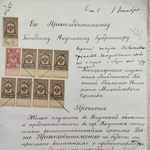
The Bureaucracy in the Cities of Northeastern Siberia (Second Half of the 19th − Early 20th Century): Material Conditions and Everyday Official Duties
The article is devoted to the characteristics of the socio-economic situation of the bureaucracy in the Northeast of Siberia in the second half of the 19th and early 20th centuries. The article analyzes the organization of the official schedule, taking into account the climatic and geographical features of the territory. Based on the official documentation, the article presents the daily routine, financial situation, and economic practices of the officials.
The article was made on the topic of the state assignment “Regional Management of Yakutia in the Communication Space of the Russian State: Social Aspect (18th − Early 20th Centuries)” (FWRS-2024-0079).
Publishing: 28/02/2026
How to cite: Arkhipova A.I. The Bureaucracy in the Cities of Northeastern Siberia (Second Half of the 19th − Early 20th Century): Material Conditions and Everyday Official Duties // Historical Courier, 2026, No. 1 (45), pp. 101−115. [Available online: http://istkurier.ru/data/2026/ISTKURIER-2026-1-08.pdf]
 Social Structure of the a Siberian City
L.N. Vorobtsova, T.Yu. Taychenacheva
The Novonikolaevsk Entrepreneur Ivan Filippovich Stoilov: Family History and the Fate of His Descendants (19th − 20th Centuries)
Based on a variety of sources, including oral ones, the article examines the history of the Stoilov (Stoilovs) family, a group of transport entrepreneurs in Novonikolaevsk (modern-day Novosibirsk). It shows how the lives of several generations of the dynasty unfolded, from the mid-19th century to the present day. Special attention is given to the most prominent member of the family, Ivan Filippovich Stoilov, who came from a peasant background.
Publishing: 28/02/2026
How to cite: Vorobtsova L.N., Taychenacheva T.Yu. The Novonikolaevsk Entrepreneur Ivan Filippovich Stoilov: Family History and the Fate of His Descendants (19th − 20th Centuries) // Historical Courier, 2026, No. 1 (45), pp. 116–125. [Available online: http://istkurier.ru/data/2026/ISTKURIER-2026-1-09.pdf]
 State Power and Regional Communities
Yu.A. Pustovoyt
Local Government Structures in the Context of M. DeLanda’s Theory of Assemblage: Emergence, Stabilization and Development Features
Based on M. DeLanda’s theory of assemblies, an approach is proposed to find relationships between types of urban assemblies (central places and port cities) and models of local government. To operationalize the latter, the concept of “political and administrative regime of a city” is introduced, and three sets of markers are proposed to indicate the level of political competition, compliance with administrative standards, and infrastructure connectivity. Based on historical data on the social, political, and spatial-architectural compositions of ancient cities, it is concluded that the “control” regime is likely to emerge in central cities, while the “coordination” regime is likely to emerge in cities that serve as hubs for trade networks.
Publishing: 28/02/2026
How to cite: Pustovoyt Yu.A. Local Government Structures in the Context of M. DeLanda’s Theory of Assemblage: Emergence, Stabilization and Development Features // Historical Courier, 2026, No. 1 (45), pp. 126−137. [Available online: http://istkurier.ru/data/2026/ISTKURIER-2026-1-10.pdf]
 State Power and Regional Communities
I.D. Dolgushin
Engineer-Colonel of the 10th District of Railways F.F. Ridder and the Case of the Reconstruction of the Podchuvashskaya Pier in Tobolsk (1810s)
This article examines the records of the repair of the Podchuvashia pier in Tobolsk in the 1810s. This local issue of river infrastructure improvement reveals a complex system of relationships between the Main Directorate of Railways and local Siberian officials. The conflict between engineer-сolonel F.F. Ridder and the provincial administration extends far beyond the pier’s reconstruction, touching on various aspects of life in Siberia in the first quarter of the 19th century.
Publishing: 28/02/2026
How to cite: Dolgushin I.D. Engineer-Colonel of the 10th District of Railways F.F. Ridder and the Case of the Reconstruction of the Podchuvashskaya Pier in Tobolsk (1810s) // Historical Courier, 2026, No. 1 (45), pp. 138−150. [Available online: http://istkurier.ru/data/2026/ISTKURIER-2026-1-11.pdf]
 State Power and Regional Communities
L.M. Dameshek
V.I. Vagin and the Historical Traditions of Studying the Reforms of M.M. Speransky in Siberia in 1822 in Russian Historiography of the Late 19th Century
The article discusses the legacy of V.I. Vagin (1823–1900), a publicist, publisher, journalist, novelist, memoirist, and prominent public figure in Siberia. He was one of the founders of the popular regionalist ideology in Siberia and authored one of the best studies on the Siberian reforms of Mikhail Speransky in 1822. His “Historical Information” is listed not only in Russian but also in foreign bibliographic references as one of the primary sources for studying this topic.
Publishing: 28/02/2026
How to cite: Dameshek l.M. V.I. Vagin and the Historical Traditions of Studying the Reforms of M.M. Speransky in Siberia in 1822 in Russian Historiography of the Late 19th Century // Historical Courier, 2026, No. 1 (45), pp. 151−157. [Available online: http://istkurier.ru/data/2026/ISTKURIER-2026-1-12.pdf]
 State Power and Regional Communities
E.А. Degaltseva
The Battle for the Charter: State Control of Art Societies in the Late 19th − Early 20th Centuries in the Cities of Western Siberia
The article examines state control over public organizations on the example of art associations in the cities of Western Siberia. The author analyzes specific practices of restraining public initiatives, the way of moving documents on the approval of charters, the motivation of officials. The influence of the specifics of the activities of societies and their personnel on the degree of state control is revealed, and the specificity of the Siberian location is shown.
Publishing: 28/02/2026
How to cite: Degaltseva E.A. The Battle for the Charter: State Control of Art Societies in the Late 19th − Early 20th Centuries in the Cities of Western Siberia // Historical Courier, 2026, No. 1 (45), pp. 158−166. [Available online: http://istkurier.ru/data/2026/ISTKURIER-2026-1-13.pdf]
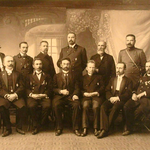 State Power and Regional Communities
N.I. Gavrilova
“Information on the Personnel of the Dumas and Meetings of Authorized Representatives” as a Source on the History of Urban Public Administration in the Transbaikal Oblast at the Turn of the 19th and 20th Centuries
The article presents the results of a study examining the dynamics of the social composition of municipal self-government bodies in the Transbaikal Oblast during the first three four-year periods following the introduction of the 1892 City Statute. The “Personnel of Municipal Public Administrations in the Transbaikal Oblast” (RSHA) files were the primary source. These materials allowed to clarify the characteristics of the social composition of city council deputies in Transbaikal, explore previously unstudied features of their rotation, identify the deputies’ experience in public service related to elections, and determine their “settlement” status (city native/newcomer).
Publishing: 28/02/2026
How to cite: Gavrilova N.I. “Information on the Personnel of the Dumas and Meetings of Authorized Representatives” as a Source on the History of Urban Public Administration in the Transbaikal Oblast at the Turn of the 19th and 20th Centuries // Historical Courier, 2026, No. 1 (45), pp. 167−184. [Available online: http://istkurier.ru/data/2026/ISTKURIER-2026-1-14.pdf]
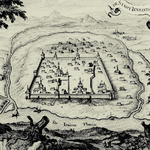 Lifestyles and Sociocultural Practices of Urban Residents
A.A. Brodnikov
From the Everyday Life of Siberian Townspeople in the First Half of the 17th Century (The “Women Issue” on the Example of Yeniseysk)
The article is devoted to the most important problem of the first Russian Siberians’ everyday lives – the lack of opportunities to start a family. Based on documentary sources (petitions, reports, and letters) connected to the early history of the Yenisei Ostrog, the article shows how the local service people and peasant population tried to get the government to address this issue. However, the central authorities tried to shift this responsibility to the Tobolsk Voivode administration.
Publishing: 28/02/2026
How to cite: Brodnikov A.A. From the Everyday Life of Siberian Townspeople in the First Half of the 17th Century (The “Women Issue” on the Example of Yeniseysk) // Historical Courier, 2026, No. 1 (45), pp. 185−194. [Available online: http://istkurier.ru/data/2026/ISTKURIER-2026-1-15.pdf]
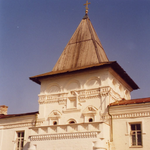 Lifestyles and Sociocultural Practices of Urban Residents
A.Yu. Mainicheva
Color Environment of Siberian Cities in the 17th − Early 18th Centuries
The article presents the results of research on the color of the urban environment that existed at the stage of the Russian culture’s rooting in the Siberian lands. For the first time, the characteristic features of the coloristics of the Siberian cities of the 17th and early 18th centuries were identified using an environmental approach, which include contrasting and nuanced combinations of natural and man-made objects; changes in color and coloristic accents in the man-made landscape, and the visual highlighting of the city center by color. It is shown that white-stone construction served as an indicator of the development of new lands.
Publishing: 28/02/2026
How to cite: Mainicheva A.Yu. Color Environment of Siberian Cities in the 17th − Early 18th Centuries // Historical Courier, 2026, No. 1 (45), pp. 195−208. [Available online: http://istkurier.ru/data/2026/ISTKURIER-2026-1-16.pdf]
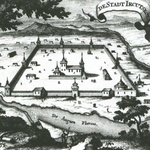 Lifestyles and Sociocultural Practices of Urban Residents
D.K. Popov
The Ceremonial Reception of Khalkha and Dzungarian Envoys in Irkutsk at the End of the 17th Century
This article describes the diplomatic ceremonial used by Russian authorities in Irkutsk in the late 17th century during negotiations with Mongol-speaking nomads. The significance of the ceremonial and rituals is revealed, as well as the contextual nature of their use in diplomatic practice. This allows to expand the understanding of the self-presentation of Russian power in diplomatic relations with Central Asian nomads in the 17th century.
The article was made on the topic of the state assignment “Features of the Formation of Intercultural Communications in Siberia − From the Stone Age to the Early Modern Period (Based on Archaeological and Written Sources)” (FSUS 2025-0009).
Publishing: 28/02/2026
How to cite: Popov D.K. The Ceremonial Reception of Khalkha and Dzungarian Envoys in Irkutsk at the End of the 17th Century // Historical Courier, 2026, No. 1 (45), pp. 209−220. [Available online: http://istkurier.ru/data/2026/ISTKURIER-2026-1-17.pdf]
 Lifestyles and Sociocultural Practices of Urban Residents
A.A. Kononov
Chains of Real Estate Transactions in Novonikolaevsk in the First Half of the 1910s
This article examines real estate transactions in Novonikolaevsk (modern day Novosibirsk) in the first half of the 1910s, based on applications to the city administration. The diverse range of transactions is classified into three areas: commercial transactions, family inheritance transfers, and financial and credit transactions. Complex chains of transactions involving the same city properties are identified. It is established that during the period under study, real estate in Novonikolaevsk was not exclusively residential but was transformed into an object of resale and a means of securing loans.
Publishing: 28/02/2026
How to cite: Kononov A.A. Chains of Real Estate Transactions in Novonikolaevsk in the First Half of the 1910s // Historical Courier, 2026, No. 1 (45), pp. 221−232. [Available online: http://istkurier.ru/data/2026/ISTKURIER-2026-1-18.pdf]
 Lifestyles and Sociocultural Practices of Urban Residents
A.K. Kirillov
Housing Tax and Low-Income Urban Women in Siberia During the First World War (Based on Materials from the City of Tomsk)
Poor widows and soldiers’ wives with two or even four children, possibly crowded with a whole family in one room in their rented housing, were the ones who would sometimes appear among those receiving housing tax bills. Why did tax offices exempt some of them from the tax, while forcing others to pay? This is investigated in the article which opens up a new stratum of primary sources awaiting introduction in the study of the Russian history.
The article was made on the topic of the state assignment “The Siberian Society as a Factor of Russia’s Territorial Growth and Unity (Late 16th − Early 20th Centuries)” (FWZM-2024-0007).
Publishing: 28/02/2026
How to cite: Kirillov A.K. Housing Tax and Low-Income Urban Women in Siberia During the First World War (Based on Materials from the City of Tomsk) // Historical Courier, 2026, No. 1 (45), pp. 233−241. [Available online: http://istkurier.ru/data/2026/ISTKURIER-2026-1-19.pdf]
 Study and Preservation of Historical and Cultural Heritage
M.V. Shilovsky
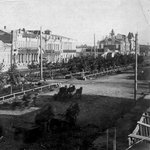
“Where is this Street…”: Formation and Development of Street Networks in Siberian Cities in the 17th − First Quarter of the 21st Century on the Example of Novonikolaevsk-Novosibirsk
The article examines the assignment and renaming of street names, squares, and alleys in Siberian cities from the 17th century to the first quarter of the 21st century. Novosibirsk (Novonikolaevsk) is the main focus of the study. Since the city was founded in the late 19th century, the specific features of spatial changes in its layout are demonstrated using the examples of the older cities of Tomsk, Krasnoyarsk, Irkutsk, Omsk, and Biysk. These settlements are used to compare and identify common patterns in the evolution of Novosibirsk’s toponyms.
The article was made on the topic of the state assignment “The Siberian Society as a Factor of Russia’s Territorial Growth and Unity (Late 16th − Early 20th Centuries)” (FWZM-2024-0007).
Publishing: 28/02/2026
How to cite: Shilovskiy M.V. “Where is this Street…”: Formation and Development of Street Networks in Siberian Cities in the 17th − First Quarter of the 21st Century on the Example of Novonikolaevsk-Novosibirsk // Historical Courier, 2026, No. 1 (45), pp. 242−256. [Available online: http://istkurier.ru/data/2026/ISTKURIER-2026-1-20.pdf]
 Study and Preservation of Historical and Cultural Heritage
A.E. Sorokin
Study of the Historical Topography of the City of Kuznetsk at the Beginning of the 20th Century by Local Historian V.P. Devyatiyarov
The article examines the research strategies of V.P. Devyatyarov (1925–1995), a local historian from Novokuznetsk, who focused on the historical topography of Kuznetsk (modern-day Novokuznetsk) in the early 20th century. In an attempt to fill the lack of cartographic materials on the history of pre-Soviet Kuznetsk, V.P. Devyatyarov was able to create a detailed map of the city in 1918 based on a wide range of personal sources.
Publishing: 28/02/2026
How to cite: Sorokin A.E. Study of the Historical Topography of the City of Kuznetsk at the Beginning of the 20th Century by Local Historian V.P. Devyatiyarov // Historical Courier, 2026, No. 1 (45), pp. 257−269. [Available online: http://istkurier.ru/data/2026/ISTKURIER-2026-1-21.pdf]
 Study and Preservation of Historical and Cultural Heritage
I.R. Sokolovsky
The Siberian School of Urban Studies Through the Eyes of a Polish Historian
The article examines reviews on the works of Siberian scholars who studied the Siberian cities of the 17th−19th centuries published by the Polish historian Andrzej Wyróbisz in the 1980s. With twenty-five years of academic experience, Wyróbisz was well-versed in Polish and foreign historiography. His reviews are characterized by a friendly yet critical tone, and his assessments remain relevant in the field of history. Additionally, these reviews provide valuable insights into the history of Polish-Russian academic relations.
The article was made on the topic of the state assignment “The Siberian Society as a Factor of Russia’s Territorial Growth and Unity (Late 16th − Early 20th Centuries)” (FWZM-2024-0007).
Publishing: 28/02/2026
How to cite: Sokolovskiy I.R. The Siberian School of Urban Studies Through the Eyes of a Polish Historian // Historical Courier, 2026, No. 1 (45), pp. 270–286. [Available online: http://istkurier.ru/data/2026/ISTKURIER-2026-1-22.pdf]
 Study and Preservation of Historical and Cultural Heritage
S.P. Khudyshkina
Features of the Museumification of Cultural Heritage Objects in the Yenisei Historical and Architectural Museum-Reserve named after A.I. Kytmanov
The article discusses the need to preserve and promote the architectural and cultural heritage of the provincial Siberian city of the 18th and early 20th centuries. It presents the experience of museumification at the Yenisei Museum-Reserve, which illustrates the mechanisms of integrating historical and cultural values into modern social reality, and emphasizes the importance of this approach for preserving the region’s identity and attracting the attention of a wide audience.
Publishing: 28/02/2026
How to cite: Khudyshkina S.P. Features of the Museumification of Cultural Heritage Objects in the Yenisei Historical and Architectural Museum-Reserve named after A.I. Kytmanov // Historical Courier, 2026, No. 1 (45), pp. 287–301. [Available online: http://istkurier.ru/data/2026/ISTKURIER-2026-1-23.pdf]
 Scientific Life
Yu.N. Efremova, D.I. Petin
First International Genealogical Scientific and Practical Conference in Omsk
In the current quarter-century, genealogy has ceased to only be of interest to academic specialists. This auxiliary historical discipline has gained widespread public popularity due to the ongoing “genealogy boom”, which is characterized by people’s desire to know their family’s past. This demand has made genealogy and related humanities a field of commercial interest. An international conference held in Omsk in November 2025 focused on discussing current practices of collaboration between archives, researchers, and commercial entities.
Publishing: 28/02/2026
How to cite: Efremova Yu.N., Petin D.I. First International Genealogical Scientific and Practical Conference in Omsk // Historical Courier, 2026, No. 1 (45), pp. 302−312. [Available online: http://istkurier.ru/data/2026/ISTKURIER-2026-1-24.pdf]
 Scientific Life
A.I. Razdorskiy
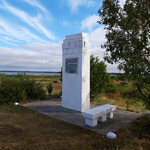
Round Table “Disappeared Cities of Russia: Problems of Preserving Historical Memory”
The article provides an overview of the roundtable discussion “Disappeared Cities of Russia: Challenges in Preserving Historical Memory”, held at the Russian National Library on February 11, 2026. The article provides brief historical information about the disappeared cities that existed in various regions of our country: Zashiversk, Ilimsk, Pustozersk, Mologa, Korcheva, the fortress cities located on the Belgorod defensive line in the 17th century and later transformed into villages, as well as the Swedish fortress of Nyenschantz and the adjacent city of Nyen, which were located on the territory of St. Petersburg. The article analyzes the experience of various regional scientific and cultural institutions in preserving the historical memory of these settlements.
Publishing: 28/02/2026
How to cite: Razdorskiy A.I. Round Table “Disappeared Cities of Russia: Problems of Preserving Historical Memory” // Historical Courier, 2026, No. 1 (45), pp. 313−326. [Available online: http://istkurier.ru/data/2026/ISTKURIER-2026-1-25.pdf]