



 From the Editor
The authors of this issue include both established scholars and young postgraduate students just beginning their journey in science. The key themes of this journal issue are resettlement policy and migrant adaptation. The focus of the discussion is the phenomenon of migrant communities, which the authors interpret in relation to different migrant groups. This conversation began at the “7th Grishaev Readings” international conference held in November 2024 and is continued by this very journal issue, which brings together articles based on the presentations delivered at the conference.
 Resettlement Policy and Adaptation of Migrants
E.V. Karpenko
The Migration Society of Qing Xinjiang (Based on Chinese Research)
The article, based on an analysis of Chinese studies of the Xinjiang military settlement system, presents the characteristics of the resettlement society of the region during the Qing period. Five types of settlements, the conditions for their formation, and the composition of the population have been identified. Thanks to the analysis of the works of Chinese historians, it was possible to reconstruct the historical picture of the settler society of Qing Xinjiang. The Qing resettlement policy sought to overcome the demographic crisis in the region, solve the problem of food supply for the army, and promoted the development of trade and cities.
Publishing: 28/10/2025
How to cite: Karpenko E.V. The Migration Society of Qing Xinjiang (Based on Chinese Research) // Historical Courier, 2025, No. 5 (43), pp. 9–17. [Available online: http://istkurier.ru/data/2025/ISTKURIER-2025-5-01.pdf]
 Resettlement Policy and Adaptation of Migrants
E.V. Miroshkin
Foreign Officers of Regular Regiments of the Siberian Inspectorate at the end of the 18th Century
This article examines the collective profile of foreign officers who served in the regular army in Siberia in the late 18th century. Based on an analysis of the service records of 78 foreign-born officers, their ethnic and social composition is revealed, and the circumstances of their entry into Russian service, their subsequent career trajectories, and their educational level are explored. The military service of these foreign officers is viewed as part of the migration process, and its study sheds light on the mechanisms and goals of the Russian Empire’s ethnic policy.
The article was carried out within the framework of the state assignment “Siberian Society as a Factor of Territorial Growth and Unity of Russia (Late 16th − Early 20th Centuries)” (FWZM-2024-0007).
Publishing: 28/10/2025
How to cite: Miroshkin E.V. Foreign Officers of Regular Regiments of the Siberian Inspectorate at the end of the 18th Century // Historical Courier, 2025, No. 5 (43), pp. 18−28 [Available online: http://istkurier.ru/data/2025/ISTKURIER-2025-5-02.pdf]
 Resettlement Policy and Adaptation of Migrants
E.V. Pshenichnaya
The Role of Russian Settlers in the Creation of Public City Libraries in Samarkand and Novyi Margilan (Ferghana) in the Late 19th and Early 20th Centuries (Based on the Central State Archive of the Republic of Uzbekistan)
The article highlights the contribution of Russian settlers to the development of the cultural infrastructure of Novyi Margilan (Ferghana) and Samarkand at the turn of the 19th and 20th centuries, with a focus on the establishment of the first public libraries: Novyi Margilan City Library (1899) and Samarkand City Library (1910). The study revealed the importance of studying the personal libraries of Russian immigrants as a tool for developing library activities that contributed to the formation of a unified cultural space in pre-revolutionary Turkestan.
The article was prepared according to the plan of research work of the State Public Scientific and Technical Library of the Siberian Branch of the Russian Academy of Sciences as part of the scientific project No. 122041100088-9 “Transformation of Book Culture in Social Communications of the 19th−21st Centuries”.
Publishing: 28/10/2025
How to cite: Pshenichnaya E.V. The Role of Russian Settlers in the Creation of Public City Libraries in Samarkand and Novyi Margilan (Ferghana) in the Late 19th and Early 20th Centuries (Based on the Central State Archive of the Republic of Uzbekistan) // Historical Courier, 2025, No. 5 (43), pp. 29−39. [Available online: http://istkurier.ru/data/2025/ISTKURIER-2025-5-03.pdf]
 Resettlement Policy and Adaptation of Migrants
M.K. Churkin
The Case of Resettlement in the Discourse of Power and Practices of Russian Civilization in the Turkestan Region (Second Half of the 19th − Early 20th Centuries)
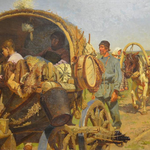
The article reveals the content of the power discourse of the resettlement business in Turkestan in the second half of the 19th − the beginning of the twentieth century. Within the framework of this period, the resettlement and spread of agrarian practices on the eastern outskirts of the empire was preceded by the discursive construction of the imperial bureaucracy's ideas about the prospects for agricultural and agricultural development of territories, as well as the definition and articulation of cultural alignment practices broadcast to the empire’s subalterns − the Russian peasantry and indigene communities of the Turkestan Territory. In the process of research, it was established that resettlement, reflected by imperial power in the categories of civilization, did not give the expected effect.
Publishing: 28/10/2025
How to cite: Churkin M.K. The Case of Resettlement in the Discourse of Power and Practices of Russian Civilization in the Turkestan Region (Second Half of the 19th − Early 20th Centuries) // Historical Courier, 2025, No. 5 (43), pp. 40−45. [Available online: http://istkurier.ru/data/2025/ISTKURIER-2025-5-04.pdf]
 Resettlement Policy and Adaptation of Migrants
O.N. Yakhno
Yekaterinburg Resident’s Costume at the Turn of 19th−20th Century: Style Features and Innovations
Based on an analysis of various sources, including press materials, museum and private collections, police reports, advertisements and catalogues of clothing manufacturers and retailers, it is concluded that this process was part of significant changes in the economic, social and cultural spheres. The entire way of everyday life was changing, as reflected in the clothing of the townspeople. A universal urban costume became widespread.
Publishing: 28/10/2025
How to cite: Yakhno O.N. Yekaterinburg Resident’s Costume at the Turn of 19th−20th Century: Style Features and Innovations // Historical Courier, 2025, No. 5 (43), pp. 46–59. [Available online: http://istkurier.ru/data/2025/ISTKURIER-2025-5-05.pdf]
 Resettlement Policy and Adaptation of Migrants
T.V. Kotyukova
“Report” by the Head of the Turkestan Department of Agriculture and State Property, A.A. Tatishchev as a Source on the History of the Migration Movement to Iran on the Eve of the First World War
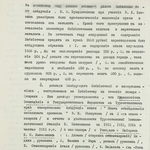
In this article, we will analyze an interesting and important source on the complex issues of Russian resettlement in the northeastern provinces of Iran. This is the “Report” from Alexei A. Tatishchev, head of the Turkestan Administration of Agriculture and State Property, addressed to Alexander V. Samsonov, Governor-General of Turkestan, regarding peasant resettlement to Iran. This document allows us to take a comprehensive look at the situation, understanding the specifics and nuances of state resettlement policy, which included several strategic lines, and to recognize that these lines had a departmental dimension.
The article was published as part of the project “Russia in Central Asia: Modernization, Cultural Ties, Memorial Policy (Second Half of the 18th − Beginning of the 21st Centuries)” (FWZM-2025-0001).
Publishing: 28/10/2025
How to cite: Kotyukova T.V. “Report” by the Head of the Turkestan Department of Agriculture and State Property, A.A. Tatishchev as a Source on the History of the Migration Movement to Iran on the Eve of the First World War // Historical Courier, 2025, No. 5 (43), pp. 60–75. [Available online: http://istkurier.ru/data/2025/ISTKURIER-2025-5-06.pdf]
 Resettlement Policy and Adaptation of Migrants
E.B. Lukieva
Baltic Immigrants in Tomsk Province in the 1920s
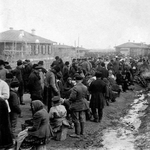
The present article examines the establishment of schools and cultural and educational centres for national minorities in Siberia during the 1920s, using Tomsk Province and district as a case study. The study is grounded in the documents of the state archives of the Tomsk and Novosibirsk regions. The findings of the study demonstrate the significance of the system of multinational education and cultural-educational activities in Tomsk Provinceand district, as well as in Siberia as a whole, in the early Soviet period among national minorities.
Publishing: 28/10/2025
How to cite: Lukieva E.B. Baltic Immigrants in Tomsk Province in the 1920s // Historical Courier, 2025, No. 5 (43), pp. 76–83. [Available online: http://istkurier.ru/data/2025/ISTKURIER-2025-5-07.pdf]
 Resettlement Policy and Adaptation of Migrants
N.A. Potapova
State Policy and Migration Strategies of Peasant Labor Migration in the 1920s−Early 1930s
The study is devoted to the transformation of the Soviet government’s attitude towards traditional peasant otkhodnichestvo (seasonal labor migration). In the 1920s, against the backdrop of urban unemployment, the state sought to restrict these spontaneous movements. However, with the onset of industrialization and the emergence of a labor shortage, the policy shifted its vector: the goal now became the etatization [bringing under state control] of migration to redistribute labor resources. The government’s response to the resistance of collective farms (kolkhozes) was the 1931 decree that legalized otkhodnichestvo. Yet, the mass flight from villages, which was disguised as legal seasonal work, compelled the authorities to take an extreme measure−the introduction of a passport regime in 1932. Under the threat of repression, this system became a powerful barrier to uncontrolled migration, though it did not eradicate it completely.
The article was carried out within the framework of the topic of the state assignment of the Ministry of Education and Science of the Russian Federation “Socio-Economic Potential of the Eastern Regions of Russia in the 20th − Early 21st Centuries: Management Strategies and Practices, Dynamics, Geopolitical Context” (FWZM-2024-0005).
Publishing: 28/10/2025
How to cite: Potapova N.A. State Policy and Migration Strategies of Peasant Labor Migration in the 1920s−Early 1930s // Historical Courier, 2025, No. 5 (43), pp. 84–93. [Available online: http://istkurier.ru/data/2025/ISTKURIER-2025-5-08.pdf]
 Resettlement Policy and Adaptation of Migrants
T.A. Kiskidosova
Living Conditions of the Evacuated Population in Khakassia during the Great Patriotic War
The article considers the features of the living conditions of evacuated citizens in Khakassia during the Great Patriotic War. I is shown how local authorities resolved issues of accommodation, employment, fuel and food for evacuees. The unpreparedness of local authorities and poor registration of arrivals complicated the reception and accommodation process. The acute housing crisis aggravated the provision of housing for the evacuated population. The disorder and domestic troubles of evacuees in Khakassia were reflected in complaints and inspections of special commissions.
Publishing: 28/10/2025
How to cite: Kiskidosova T.A. Living Conditions of the Evacuated Population in Khakassia during the Great Patriotic War // Historical Courier, 2025, No. 5 (43), pp. 94–107. [Available online: http://istkurier.ru/data/2025/ISTKURIER-2025-5-09.pdf]
 Forced Resettlement and Displacement
A.I. Hanchar
Organisation of Expulsion from the North-Western Region of the Russian Empire for Participation in the Events of 1863 (On the Example of the Case of Ksendz I.I. Srzhedzinski)
The article reveals the organisation of transfer measures in the Russian Empire of the participants of the mutiny of 1863. On the example of the case of a Roman Catholic priest of Bielsk district, Grodno province, the mistakes made during the implementation of the procedure itself are shown, as well as the mechanism of their elimination by the executive authorities. The scholarly novelty of the work lies in its comprehensive approach, which combines a macro-analysis of the scale of the measures with a micro-historical study of a specific case, thereby revealing not only the general picture but also the internal mechanisms, flaws, and human consequences of the imperial policy.
Publishing: 28/10/2025
How to cite: Hanchar A.I. Organisation of Expulsion from the North-Western Region of the Russian Empire for Participation in the Events of 1863 (On the Example of the Case of Ksendz I.I. Srzhedzinski) // Historical Courier, 2025, No. 5 (43), pp. 108–122.[Available online: http://istkurier.ru/data/2025/ISTKURIER-2025-5-10.pdf]
 Forced Resettlement and Displacement
P.E. Dobrachev
The Image of Early Soviet Political Exile in the Representation of the “Socialist Courier” in 1923−1924
The article at the microhistoric level reveals the vital activity of the exiled society using the content analysis method based on the issues of the Socialist Bulletin, the printed organ of the Foreign Delegation of the RSDLP. The author establishes the main images of exile in the emigrant socialist discourse and the intention of the editors of this newspaper to construct the appearance of Soviet exile.
Publishing: 28/10/2025
How to cite: Dobrachev P.E. The Image of Early Soviet Political Exile in the Representation of the “Socialist Courier” in 1923−1924 // Historical Courier, 2025, No. 5 (43), pp. 123–135. [Available online: http://istkurier.ru/data/2025/ISTKURIER-2025-5-11.pdf]
 Forced Resettlement and Displacement
E.V. Polyansky
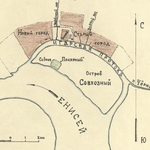
Special Settlers in Igarka: Administrative Approaches and Governance Mechanisms in the 1930s
The article examines the mechanisms of governance over special settlers in Igarka during the 1930s as a local case study that reveals the specific features of administrative logic and power relations on the Soviet periphery. The analysis of the Igarka case reveals the contradictions between the repressive nature of special resettlement and the necessity of integrating settlers into economic processes. This perspective offers new insight into the functioning of Soviet power under the pressures of modernization and local constraints, while also clarifying the boundaries of regional actors’ autonomy within a centralized system of governance.
Publishing: 28/10/2025
How to cite: Polyanskiy E.V. Special Settlers in Igarka: Administrative Approaches and Governance Mechanisms in the 1930s // Historical Courier, 2025, No. 5 (43), pp. 136–149. [Available online: http://istkurier.ru/data/2025/ISTKURIER-2025-5-12.pdf]
 Forced Resettlement and Displacement
T.P. Teterevleva, E.E. Shurupova
“…Farmers Unfamiliar with Sea or Forest”: Special Settlers and the Development of the Iodine Industry in the Northern Region in the 1930s
The article examines the features of the use of the labor of special settlers in the iodine industry of the Northern Territory in the 1930s. Based on the documents of the State Archive of the Arkhangelsk Region, the working and living conditions of immigrants, the problems of organizing the harvesting of algae and the production of iodine in extreme natural and climatic conditions were studied. It was revealed that the transition from a hybrid model of special settlements to non-statutory cooperatives in algae production reflected attempts to adapt the system of special settlements to industry specifics.
Publishing: 28/10/2025
How to cite: Teterevleva T.P., Shurupova E.E. “…Farmers Unfamiliar with Sea or Forest”: Special Settlers and the Development of the Iodine Industry in the Northern Region in the 1930s // Historical Courier, 2025, No. 5 (43), pp. 150−162. [Available online: http://istkurier.ru/data/2025/ISTKURIER-2025-5-13.pdf]
 Forced Resettlement and Displacement
S.N. Adamyan
Armenian Families within the “Turks” Special Contingent: Socio‑Demographic Characteristics
This article analyzes the sociodemographic characteristics of Armenian families deported to the Tomsk region in 1949. The primary source is data from the Tomsk region Ministry of Internal Affairs' Department of Special Settlements for 1951−1956. The article analyzes parameters such as the gender and age of the heads of deported families, their place of residence, and their family composition. The author concludes that “Turkish” Armenians were part of a combined special contingent, the basis for whose deportation is the former foreign citizenship of older family members. These Armenians are representatives of diasporas, primarily living in the Georgian SSR.
The article was published as part of the project “Socio-Economic Potential of the Eastern Regions of Russia in the 20th − Early 21st Centuries: Management Strategies and Practices, Dynamics, Geopolitical Context” (FWZM‑2024-0005).
Publishing: 28/10/2025
How to cite: Adamyan S.N. Armenian Families within the “Turks” Special Contingent: Socio‑Demographic Characteristics // Historical Courier, 2025, No. 5 (43), pp. 163–170. [Available online: http://istkurier.ru/data/2025/ISTKURIER-2025-5-14.pdf]
 Forced Resettlement and Displacement
N.N. Ablazhey, M.A. Kositsin
Settlements in the Open Flooded Area of the Novosibirsk Hydroelectric Power Station in the Mid-1950s: Relocation Regulations and Practices
The article is devoted to the transformation of the settlement structure in connection with the construction in the 1950s on the river. Ob Novosibirsk hydroelectric station and the creation of a reservoir. The purpose of the study is to identify changes in the settlement structure of the territory in the flood and flooding zone by analyzing the practices of transferring settlements, returning and transferring land, approaches to urban planning and standardization of new settlements. It was concluded that resettlement in connection with hydraulic construction became part of the transformation policy of the agrarian settlement system, aimed at transforming and reconstructing the village through the resettlement of small settlements and the enlargement of rural settlements.
The article was published as part of the project “Socio-Economic Potential of the Eastern Regions of Russia in the 20th − Early 21st Centuries: Management Strategies and Practices, Dynamics, Geopolitical Context” (FWZM‑2024-0005).
Publishing: 28/10/2025
How to cite: Ablazhey N.N., Kositsin M.A. Settlements in the Open Flooded Area of the Novosibirsk Hydroelectric Power Station in the Mid-1950s: Relocation Regulations and Practices // Historical Courier, 2025, No. 5 (43), pp. 171−187. [Available online: http://istkurier.ru/data/2025/ISTKURIER-2025-5-15.pdf]
 Forced Resettlement and Displacement
L.N. Komleva
Relocation of Residents and Relocation of Buildings from the Flood Zone of the Bratsk Hydroelectric Power Station
The article considers the organization of work on resettlement of the population and transfer of buildings, structures and facilities from the flood zone of the Bratsk hydroelectric power station reservoir. Resettlement required a lot of effort from them, low mobility of citizens was noted. It was concluded that the construction of the Bratsk hydroelectric power station had both positive aspects, consisting in the development of the region, an increase in the number of jobs, etc., and negative aspects, which consisted in the resettlement of the population, deforestation, disorganization of the events, abuse of office, etc.
Publishing: 28/10/2025
How to cite: Komleva L.N. Relocation of Residents and Relocation of Buildings from the Flood Zone of the Bratsk Hydroelectric Power Station // Historical Courier, 2025, No. 5 (43), pp. 188–194. [Available online: http://istkurier.ru/data/2025/ISTKURIER-2025-5-16.pdf]
 Forced Resettlement and Displacement
A.N. Vorobyev
Evicted “Parasites” in Krasnoyarsk Krai in 1961−1965: Between Integration and Isolation
The article examines the situation of evicted "parasites" in the Krasnoyarsk Territory in 1961-1965 in the context of changing norms and practices of social control during the Khrushchev thaw. It examines the number of evicted persons, the organization of supervision, their labor and social structure, their impact on the growth of criminal crime. The situation with the evicted "sectarians" was analyzed separately. It is shown that the current conditions in the places of settlement led to the intensification of the processes of social marginalization and even more pushing the "parasites" to the periphery of Soviet society.
Publishing: 28/10/2025
How to cite: Vorobyev A.N. Evicted “Parasites” in Krasnoyarsk Krai in 1961−1965: Between Integration and Isolation // Historical Courier, 2025, No. 5 (43), pp. 195−206. [Available online: http://istkurier.ru/data/2025/ISTKURIER-2025-5-17.pdf]
 Demographic Processes
L.N. Slavina
The Siberian Migration Society Based on the Results of the All-Union Population Census of 1926
The formation of a migrant society in Siberia is examined for the first time using the results of the 1926 All-Union Population Census. The focus is on population as the material foundation of society, viewed as the product of close interactions over centuries of natural growth in the region and multiple migration streams. The socio-demographic characteristics of rural and urban parts of Siberian society are compared, as are the role of migrants in their population growth and structural changes. The degree of dependence of each on the migrant factor is identified. The article highly appreciates the informational potential of the 1926 census results and concludes that their immediate introduction into scientific circulation is essential.
Publishing: 28/10/2025
How to cite: Slavina L.N. The Siberian Migration Society Based on the Results of the All-Union Population Census of 1926 // Historical Courier, 2025, No. 5 (43), pp. 207−221. [Available online: http://istkurier.ru/data/2025/ISTKURIER-2025-5-18.pdf]
 Demographic Processes
Y.A. Kuznetsova
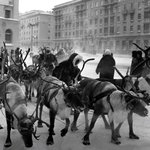
The Urbanization in the North Siberia: The Problems of Formation of the Urban Population and Settlement System in the 20th Century
The article reconstructs the process of the urbanization development of the national regions of Northern Siberia in the 20th century, which turned from economic underdeveloped territories with the small, mainly nomadic indigenous population into a rapidly developed industrial centers with the high concentration of urban population and the urbanization rates by the end of the 20th century. An analysis of the urban population was carried out on the basis of official statistical data. The process of the formation of the urban population in the soviet period was analyzed as a result of active mechanical growth (migrations) and the transition of the rural population to urban status as a result of administrative decisions are based on the methodological concepts of modernization and urbanization transitions.
The article was published as part of the project “Socio-Economic Potential of the Eastern Regions of Russia in the 20th − Early 21st Centuries: Management Strategies and Practices, Dynamics, Geopolitical Context” (FWZM‑2024-0005).
Publishing: 28/10/2025
How to cite: Kuznetsova Ya.A. The Urbanization in the North Siberia: The Problems of Formation of the Urban Population and Settlement System in the 20th Century // Historical Courier, 2025, No. 5 (43), pp. 222−233. [Available online: http://istkurier.ru/data/2025/ISTKURIER-2025-5-19.pdf]
 World of the Book
O.V. Filippenko
Review: Zimmerman D. Ensnared between Hitler and Stalin: Refugee Scientists in the USSR. Toronto: University of Toronto Press, 2023. VII, 360 pp.
David Zimmerman’s new book focuses on the fate of 36 German-speaking scholars who fled to seek refuge from Nazi Germany to the Soviet Union. The author not only showed the process of their cultural adaptation in the new country, but also revealed their academic contribution to the development of Soviet science. Zimmerman vividly demonstrated how two dictatorships manipulated the lives of a group of prosperous scientists. Of particular value to this study is the fact that in it the history of the 20th century is considered not through dry statistics, but through analysis at the micro level of the life path of specific individuals.
Publishing: 28/10/2025
How to cite: Filippenko O.V. Review: Zimmerman D. Ensnared between Hitler and Stalin: Refugee Scientists in the USSR. Toronto: University of Toronto Press, 2023. VII, 360 pp. // Historical Courier, 2025, No. 5 (43), pp. 234−241. [Available online: http://istkurier.ru/data/2025/ISTKURIER-2025-5-20.pdf]