



 From the Editor
This issue of the journal was prepared in collaboration with the organizing committee of the Eternal Contribution Award, established by the National Endowment Association (NEA) for the best research on endowments in pre-revolutionary charity.
A trust fund is a donation made in the form of untouchable capital (such as securities or real estate) that was invested at interest and/or generated income that was used to fund social initiatives, such as establishing scholarships, building hospitals, schools, theaters, churches, and more, while the capital itself remained untouched and continued to generate income.
 Endowments as a Historical Phenomenon
G.N. Ulianova
Endowments in the History of Philanthropy in Russia in the 19th and Early 20th Century: Legislation, Classification, Financial Mechanisms
On December 27, 1817, a Senate decree was issued in the Russian Empire entitled “On donations in favor of charitable institutions and on the use of these, according to the will of the donor”. For the first time, the law established a rule according to which charitable institutions should be established only “when sufficient funds are assigned to their maintenance”. The first inviolable target capital began to flow back in the 1770s, and in the 19th century, an extensive system of financing philanthropic societies and institutions of all types for interest on target inviolable capital developed in the charitable sector of Russia, and donors' money was invested in government-guaranteed securities, which gave confidence in the annual receipt of solid income. The article discusses the issues of legislation and practice in the use of target capital.
Publishing: 28/08/2025
How to cite: Ulianova G.N. Endowments in the History of Philanthropy in Russia in the 19th and Early 20th Century: Legislation, Classification, Financial Mechanisms // Historical Courier, 2025, No. 4 (42), pp. 12−37. [Available online: http://istkurier.ru/data/2025/ISTKURIER-2025-4-01.pdf]
 Endowments in Education
I.V. Maslova
Endowment Funds in Educational Institutions of the Russian Empire in the Second Half of the 19th Century
The article is devoted to the practice of forming endowment capital for the establishment of charitable scholarships in educational institutions of the Russian Empire in the second half of the 19th − early 20th century. Named scholarships were understood as charitable funds allocated to pay for tuition and the full maintenance of a student during his studies. By the 1870s Russian legislation formed rules mandatory for the establishment of scholarships at the expense of interest on target capital invested in government securities. The article examines the reasons for the spread of educational endowments and the types of charitable scholarships.
Publishing: 28/08/2025
How to cite: Maslova I.V. Endowment Funds in Educational Institutions of the Russian Empire in the Second Half of the 19th Century // Historical Courier, 2025, No. 4 (42), pp. 38−48. [Available online: http://istkurier.ru/data/2025/ISTKURIER-2025-4-02.pdf]
 Endowments in Education
E.S. Butrin
“Eternal Deposits” in Educational Institutions of Ivanovo-Voznesensk in the Late 19th – Early 20th Century
The article, based on the city of Ivanovo-Voznesensk, examines the phenomenon of “eternal deposits” in educational institutions of the Russian Empire in the late 19th − early 20th century. Interest from them provided scholarships for poor students. The author concludes that in the last years of the 19th century, the evolution of civil society led to new trends in the development of scholarship capital. The city’s commercial and industrial elite is involved in this process, and scholarships are established by private individuals, commercial firms, and public institutions. A significant part of them is “memorial” in nature and appears with the aim of immortalizing the name of a deceased person.
Publishing: 28/08/2025
How to cite: Butrin E.S. “Eternal Deposits” in Educational Institutions of Ivanovo-Voznesensk in the Late 19th – Early 20th Century // Historical Courier, 2025, No. 4 (42), pp. 49−64. [Available online: http://istkurier.ru/data/2025/ISTKURIER-2025-4-03.pdf]
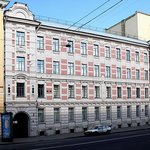 Endowments in Education
V.V. Fortunatov
A House for Students: from the History of the Nicholas Dormitory Named after the August Chairman of the Siberian Railway Committee for Students of the Emperor Alexander I Railway Engineer Institute
The article examines the history of the construction of a dormitory for students of the St. Petersburg Institute of Railway Engineers named after Emperor Alexander I in 1894−1895. The dormitory successfully operated for more than 20 years until 1917. The article concludes that the government and private entrepreneurs (joint-stock railway companies) were willing to invest significant funds in creating favorable living conditions for future railway engineers who were essential for the country.
Publishing: 28/08/2025
How to cite: Fortunatov V.V. A House for Students: from the History of the Nicholas Dormitory Named after the August Chairman of the Siberian Railway Committee for Students of the Emperor Alexander I Railway Engineer Institute // Historical Courier, 2025, No. 4 (42), pp. 65−76. [Available online: http://istkurier.ru/data/2025/ISTKURIER-2025-4-04.pdf]
 Endowments in Education
I.V. Sidorchuk, E.A. Rostovtsev, S.A. Danilova
The Meaning of Endowment in the Activities of the St. Petersburg Imperial University Student Welfare Society (1873−1918)
The study, based on the materials of the Society for Assistance to Students of St. Petersburg University, analyzes the role of untouchable and personal funds in the implementation of various financial initiatives aimed at improving the quality of life for students. The study concludes that income from membership fees, public lectures, or book publishing was not reliable and did not allow for the effective solution of major problems. Instead, this was achieved through the well-organized work of managing, increasing, and utilizing various funds.
Publishing: 28/08/2025
How to cite: Sidorchuk I.V., Rostovtsev E.A., Danilova S.A. The Meaning of Endowment in the Activities of the St. Petersburg Imperial University Student Welfare Society (1873−1918) // Historical Courier, 2025, No. 4 (42), pp. 77−87. [Available online: http://istkurier.ru/data/2025/ISTKURIER-2025-4-05.pdf]
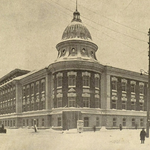 Endowments in Education
E.A. Chernoukhov
The Perm Provincial Zemstvo Target Scholarship Fund: Contradictory Results
The article analyzes the contradictory historical experience of the organization and activities of the target fund of the Perm provincial zemstvo for financing scholarships in higher educational institutions (1886−1916). It is shown that the main problem in its activities was the steadily growing debts of scholarship holders to return the funds allocated to them. This limited the prospects for the development of a largely unique target eternal fund.
Publishing: 28/08/2025
How to cite: Chernoukhov E.A. The Perm Provincial Zemstvo Target Scholarship Fund: Contradictory Results // Historical Courier, 2025, No. 4 (42), pp. 88−96. [Available online: http://istkurier.ru/data/2025/ISTKURIER-2025-4-06.pdf]
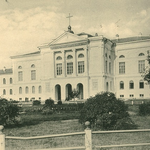 Endowments in Education
M.O. Smetanin
The Role of Untouchable Capital in the Establishment of Imperial Tomsk University
The article examines the role of untouchable capital (endowments) in the formation and functioning of the Imperial Tomsk University. It was revealed that within the framework of the West Siberian Educational District, Tomsk University was in the second place in terms of the number of endowments contributed in its favor, and on the first place in terms of the amount of initial monetary investments and the interest accrued on them. These funds were used both for the construction and equipment of educational buildings and for the establishment of individual scholarships to support low-income students.
Publishing: 28/08/2025
How to cite: Smetanin M.O. The Role of Untouchable Capital in the Establishment of Imperial Tomsk University // Historical Courier, 2025, No. 4 (42), pp. 97−112. [Available online: http://istkurier.ru/data/2025/ISTKURIER-2025-4-07.pdf]
 Endowments in the Field of Public Charity
D.A. Begovatov
Inviolable Capital as a Tool for Material Support of the Urban Provincial Clergy in the First Half of the 19th Century (Using the Example of the Tver Diocese)
The article reveals the role of inviolable capital in the material support of the urban clergy and poor clergy in the Tver diocese in the first half of the 19th century. It notes the growing popularity of this instrument of charity for providing churches, clergy and the sphere of spiritual care, emphasizes its weaknesses, classifies deposits by intended purpose, determines the circle of donors, and identifies strategies for managing financial resources.
Publishing: 28/08/2025
How to cite: Begovatov D.A. Inviolable Capital as a Tool for Material Support of the Urban Provincial Clergy in the First Half of the 19th Century (Using the Example of the Tver Diocese) // Historical Courier, 2025, No. 4 (42), pp. 113–127. [Available online: http://istkurier.ru/data/2025/ISTKURIER-2025-4-08.pdf]
 Endowments in the Field of Public Charity
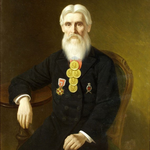
I.I. Leyman
Vologda Merchant Timofey Emel’yanovich Kolesnikov: “…Capital Must Remain Forever Inviolable”
The article describes the charitable activities of Timofey Emel’yanovich Kolesnikov (1829−1899), a Vologda merchant of the Second guild, one of the most striking examples of merchant philanthropy in pre-revolutionary Russia. The main stages of his biography, his service in local city government and other regional structures, and large-scale donations for various needs are highlighted, and his main initiatives are analyzed. The article concludes that endowment capital was an important instrument for the development of merchant charity in Russia in the second half of the 19th − early 20th century.
The publication was prepared as part of the implementation of the state assignment by the Federal Research Center of the Komi Scientific Center of the Ural Branch of the Russian Academy of Sciences.
Publishing: 28/08/2025
How to cite: Leyman I.I. Vologda Merchant Timofey Emel’yanovich Kolesnikov: “…Capital Must Remain Forever Inviolable” // Historical Courier, 2025, No. 4 (42), pp. 128–144. [Available online: http://istkurier.ru/data/2025/ISTKURIER-2025-4-09.pdf]
 Endowments in the Field of Public Charity
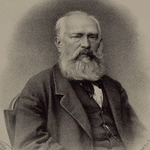
N.P. Bukharinа
Trust (Untouchable) Capital of Senator N.A. Butskovskiy as a Tool for Rehabilitation of Persons Prosecuted as a Result of Investigative and Judicial Error
The article deals with the prerequisites of creation and peculiarities of management and use of the endowment unique for the domestic pre-revolutionary philanthropy, which was established by a prominent figure of the judicial reform of 1864 N.A. Butskovskiy. On the basis of the analysis of published financial reports of Senator N.A. Butskovskiy’s endowment an assessment of its effectiveness in solving the problem of compensation for property damage to persons who were prosecuted as a result of investigative and judicial error is given.
Publishing: 28/08/2025
How to cite: Bukharinа N.P. Trust (Untouchable) Capital of Senator N.A. Butskovskiy as a Tool for Rehabilitation of Persons Prosecuted as a Result of Investigative and Judicial Error // Historical Courier, 2025, No. 4 (42), pp. 145−164. [Available online: http://istkurier.ru/data/2025/ISTKURIER-2025-4-10.pdf]
 Endowments in the Field of Public Charity
A.A. Gusel’nikova
Target Capital of the House for the Poor, Elderly, and Disabled Citizens of the Kazan City Public Bank
The study focuses on the charitable initiatives of the Kazan merchants and nobility in the first half of the 19th century. It examines the formation of two interconnected organizations: the Kazan City Public Bank and the House of Charity. The study analyzes the effectiveness of the House of Charity's capital, which was deposited as an "eternal contribution" in the Kazan City Public Bank, and the mechanisms for its growth. The study also describes the social impact of the House of Charity's activities.
Publishing: 28/08/2025
How to cite: Gusel’nikova A.A. Target Capital of the House for the Poor, Elderly, and Disabled Citizens of the Kazan City Public Bank // Historical Courier, 2025, No. 4 (42), pp. 165−174. [Available online: http://istkurier.ru/data/2025/ISTKURIER-2025-4-11.pdf]
 Endowments in the Field of Public Charity
A.V. Tikhovodova
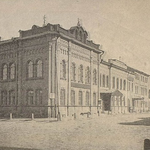
Activity of the Alexandrovskaya City Public Women’s Almshouse in Nizhny Novgorod in the Late 19th − Early 20th Century
The article is devoted to the functioning of the Alexandrovsky city public women’s almshouse in the late 19th and early 20th centuries, a charitable institution opened in Nizhniy Novgorod in 1868. Based on the charter of the almshouse and annual reports sent by the trustees to the City Duma, the history of its creation is recreated, the budget and material base, the composition of the trustees, employees and those in care are described. It is concluded that the activity of the institution in question is an example of close cooperation between private benefactors and local city governments.
Publishing: 28/08/2025
How to cite: Tikhovodova A.V. Activity of the Alexandrovskaya City Public Women’s Almshouse in Nizhny Novgorod in the Late 19th − Early 20th Century // Historical Courier, 2025, No. 4 (42), pp. 175−195. [Available online: http://istkurier.ru/data/2025/ISTKURIER-2025-4-12.pdf]
 Endowments in the Field of Public Charity
Yu.V. Antonova
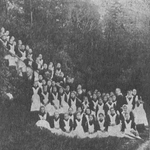
Financing of Activities of the Imperial Women’s Patriotic Society (To the Background of the Issue)
The article examines examples of charitable activities in the field of education and upbringing based on the records of the Imperial Women’s Patriotic Society, analyzing the issues of financing the activities of the Society in the 19th century and schemes for the formation of capital, including inviolable. The given facts show the dynamism and effectiveness of charitable institutions in pre-revolutionary Russia, their willingness to respond promptly to changing socio-economic conditions, their ability to mitigate the negative effects of social inequality and meet the growing needs of population.
Publishing: 28/08/2025
How to cite: Antonova Yu.V. Financing of Activities of the Imperial Women’s Patriotic Society (To the Background of the Issue) // Historical Courier, 2025, No. 4 (42), pp. 196−207. [Available online: http://istkurier.ru/data/2025/ISTKURIER-2025-4-13.pdf]
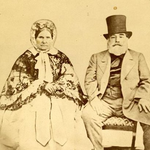 Endowments for Regional Development
T.A. Kattsina
“Eternal Deposits”: Plans, Implementation, Risks (Using the Example of the Yeniseisk Province of the 19th − Early 20th Century)
The article reveals the concept of “eternal deposit” and considers the first framework laws regulating the sphere of attracting financial resources “for all time”, as well as the Rules for accepting eternal contributions. Using the example of the Yeniseisk Province in the 19th and early 20th centuries, the article demonstrates the practices of forming “eternal deposits” and their application in healthcare, education, and social care. The article identifies the risks associated with eternal contributions, examines the social composition of contributors, the volume of contributions, and their role in the development of social sphere and charitable assistance to low-income groups.
Publishing: 28/08/2025
How to cite: Kattsina T.A. “Eternal Deposits”: Plans, Implementation, Risks (Using the Example of the Yeniseisk Province of the 19th − Early 20th Century) // Historical Courier, 2025, No. 4 (42), pp. 208−220. [Available online: http://istkurier.ru/data/2025/ISTKURIER-2025-4-14.pdf]
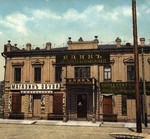 Endowments for Regional Development
N.I. Gavrilova
“…I am Ready to Donate Bank Notes from My Capital”: Formation and Functioning of Siberian Merchants’ Endowment Capitals in the Charitable Sphere (Based on Materials from Irkutsk Merchants’ Large Endowments)
The article presents the results of a study of the formation and functioning of charitable endowment capitals of Irkutsk merchants. It is revealed that since the late 1870s, city self-government bodies became the most important institutions in management of such capital. It is proven that the extensive system of interrelations created around endowments has evolved towards greater coordination of actions, primarily between donors and managers of charitable endowments. The desire to use them effectively stimulated the development of a rational, socially responsible model of behavior for each party.
Publishing: 28/08/2025
How to cite: Gavrilova N.I. “…I am Ready to Donate Bank Notes from My Capital”: Formation and Functioning of Siberian Merchants’ Endowment Capitals in the Charitable Sphere (Based on Materials from Irkutsk Merchants’ Large Endowments) // Historical Courier, 2025, No. 4 (42), pp. 221–239. [Available online: http://istkurier.ru/data/2025/ISTKURIER-2025-4-15.pdf]
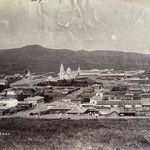 Endowments for Regional Development
P.E. Shulgina
Target Capital of the Zabaikal’sk Merchants as One of the Main Mechanisms for the Development of Pre-Revolutionary Philanthropy
The article examines the philanthropic activities of the Trans-Baikal merchants, which were expressed in the form of establishing trust funds to finance educational and social institutions in the region (the eastern part of the Irkutsk province). The focus is on the donations made by the merchants of Chita, Nerchinsk, Verkhneudinsk, and Kyakhta. The dynamic, size, and purpose of their investments are identified, and the results achieved are characterized.
Publishing: 28/08/2025
How to cite: Shulgina P.E. Target Capital of the Zabaikal’sk Merchants as One of the Main Mechanisms for the Development of Pre-Revolutionary Philanthropy // Historical Courier, 2025, No. 4 (42), pp. 240−251. [Available online: http://istkurier.ru/data/2025/ISTKURIER-2025-4-16.pdf]
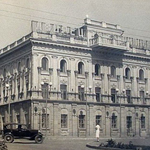 Endowments for Regional Development
I.N. Litvinova
Traditions and Innovations in the Field of Target Capital during the World War I (Based on Materials from the Southern Cities of the Russian Empire)
The article examines the forms of assistance provided to the active army, wounded soldiers, and their families by residents of the southern cities of the Russian Empire that were located in the rear during the First World War. The author characterizes both traditional forms of support (public fundraising for money, items, and products) and innovations of wartime (creation of relevant charitable organizations, establishment of trust funds for the maintenance of hospital beds and wards named after donators). The article also provides information about prominent Tsaritsyn benefactors − merchants A.V. Voronin, G.N. Serebryakov and V.F. Lapshin.
The work was carried out with the financial support of the Russian Science Foundation as part of project No. 24‑28‑01304 “Volunteer and Charitable Practices of Russian Society in Extreme Living Conditions (The First Quarter of the 20th and 21st Centuries): A Comparative Analysis”.
Publishing: 28/08/2025
How to cite: Litvinova I.N. Traditions and Innovations in the Field of Target Capital during the World War I (Based on Materials from the Southern Cities of the Russian Empire) // Historical Courier, 2025, No. 4 (42), pp. 252−260. [Available online: http://istkurier.ru/data/2025/ISTKURIER-2025-4-17.pdf]
 Endowments for Regional Development
S.Yu. Lavrenchuk
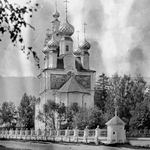
From Generation to Generation: the “Eternal Deposit” as One of the Tools for Solving Social Problems by St. Petersburg Philanthropists and Merchant Bushtuevs
The article is devoted to the family charitable projects of the St. Petersburg merchants Bushtuevs and the use of untouchable capital in these projects. It highlights the social conditions, challenges, and problems that led to the implementation of various socially significant initiatives using untouchable capital. The article provides a detailed description of the economic aspects of the issue, as well as its semantic, symbolic, and value-based aspects.
Publishing: 28/08/2025
How to cite: Lavrenchuk S.Yu. From Generation to Generation: the “Eternal Deposit” as One of the Tools for Solving Social Problems by St. Petersburg Philanthropists and Merchant Bushtuevs // Historical Courier, 2025, No. 4 (42), pp. 261−276. [Available online: http://istkurier.ru/data/2025/ISTKURIER-2025-4-18.pdf]
 World of the Book
I.R. Sokolovsky
Review of the Book: Lizunov P.V. Merchant Exchange in Russia in the 18th − First Third of the 19th Century. St. Petersburg: Historical Illustration, 2024. 488 p. + 32 p. ill.
Human life is determined by basic needs for water, food, clothing and shelter. If these needs are satisfied within the framework of one particular household, economic relations does not emerged. However, when the need for exchange arises, or when exchange contributes to the creation of excess consumption, the economy as a form of social activity arises. In economic science, a number of theoretical models have been developed that explain the patterns of exchange processes, including the theory of informational a asymmetry by J. Stiglitz (Nobel Prize winner in 2001). Nevertheless, theoretical constructs require empirical confirmation. The monograph by P.V. Lizunov under review provides extensive factual material, which makes it valuable for specialists in the field of economic history.
The article was completed within the framework of the topic of the state assignment of the Ministry of Education and Science of the Russian Federation “Siberian Society as a Factor in the Territorial Growth and Unity of Russia (Late 16th − Early 20th Centuries)” (FWZM-2024-0007).
Publishing: 28/08/2025
How to cite: Sokolovsky I.V. Review of the Book: Lizunov P.V. Merchant Exchange in Russia in the 18th − First Third of the 19th Century. St. Petersburg: Historical Illustration, 2024. 488 p. + 32 p. ill. // Historical Courier, 2025, No. 4 (42), pp. 277−282. [Available online: http://istkurier.ru/data/2025/ISTKURIER-2025-4-19.pdf]
 World of the Book
V.V. Zhuravlev
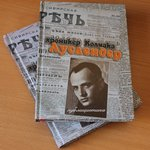
Review of the Book: Kolchak’s Chronicler Ausländer: Materials to the Creative Biography of the Writer: In 2 Vol. / Compiled by Yu.L. Mandrika. Tyumen: Mandr i Ka, 2025. Vol. 1: Opinion Journalism. 240 p. Vol. 2: Prose (Unfinished Novel, Stories, Legend, Essays, Sketches). 240 p. Circulation 30 Copies
Subject of review a new edition of the works of S.A. Ausländer prepared by the efforts of A.L. Posadskov (†2024) and Y.L. Mandrika (†2025). The relevance of the work is due to the lack of completeness in the study of the writer’s legacy of the Civil War period. The publication forms a textual basis and introduces hard-to-access sources, catalyzing interdisciplinary research at the intersection of history and literary studies.
The article was completed within the framework of the topic of the state assignment of the Ministry of Education and Science of the Russian Federation “Society and Power in Russia in the 20th − Early 21st Centuries: Political Participation, Communication, Actor Identity” (FWZM-2024-0008).
Publishing: 28/08/2025
How to cite: Zhuravlev V.V. Review of the Book: Kolchak’s Chronicler Ausländer: Materials to the Creative Biography of the Writer: In 2 Vol. / Compiled by Yu.L. Mandrika. Tyumen: Mandr i Ka, 2025. Vol. 1: Opinion Journalism. 240 p. Vol. 2: Prose (Unfinished Novel, Stories, Legend, Essays, Sketches). 240 p. Circulation 30 Copies // Historical Courier, 2025, No. 4 (42), pp. 283–294. [Available online: http://istkurier.ru/data/2025/ISTKURIER-2025-4-20.pdf]