



 From the Editor
The history of Russian Orthodoxy has always been a focus of attention for Russian humanities. Even in the most unfavorable periods for its study, humanists found opportunities for research work in this area of scientific knowledge. Like no one else, the “ancientists” and medievalists have always known that without studying the history of Russian Orthodoxy it is impossible to fully understand Russian history in the Middle Ages and the modern era. Even in later times, religion played a significant role in the life of our country and people. Over the past three and a half decades, exceptionally favorable conditions have emerged for conducting research on a comprehensive study of confessional history. Significant quantitative and qualitative changes have occurred in this field, the subject range has expanded incredibly and become more detailed, the professional team has expanded significantly, including both secular and religious researchers, and the methods of conducting scientific analysis have become more sophisticated.
 Orthodox Hierarchs in Russian Church and Secular History
N.V. Bashnin
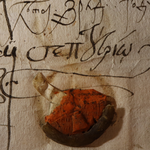
Bishop Sylvester, Archbishop Nektarios the Greek and the Certification by the Seals of Church Hierarchs of the Approved Charter on the Election of Mikhail Feodorovich Romanov to the Throne: To the Formulation of the Problem
The article presents the results of a study of the biographies of Bishop Sylvester and Archbishop Nectarius the Greek. In April-May 1613, an “approved” letter was drawn up on the election of Mikhail Fedorovich Romanov to the kingdom. 10 seals of metropolitans, archbishops and bishops were attached to this document. Archbishop Nektary the Greek was in Moscow and participated in the events of May-July 1613. He could attach his seal to the letter only after his ordination on June 26 and, obviously, after the production of the matrix, but he did not sign on the back of the letter, since in May 1613 he was not in the rank of Archbishop of Vologda and Belozersky. Bishop Sylvester, despite the fact that Korela was captured by the Swedes and he was a bishop without a pulpit, signed and sealed in accordance with his hierarchical position in the Russian Church.
The study was carried out as part of a project supported by the Russian Science Foundation: “Sealings of Russian Bishops in the 17th and First Quarter of the 18th Century: Representation of Power” (project No. 25-28-03213).
Publishing: 28/04/2026
How to cite: Bashnin N.V. Bishop Sylvester, Archbishop Nektarios the Greek and the Certification by the Seals of Church Hierarchs of the Approved Charter on the Election of Mikhail Feodorovich Romanov to the Throne: To the Formulation of the Problem // Historical Courier, 2026, No. 2 (46), pp. 13−34. [Available online: http://istkurier.ru/data/2026/ISTKURIER-2026-2-01.pdf]
 Orthodox Hierarchs in Russian Church and Secular History
I.A. Ustinova
Holy Russian Bishops of the 17th Century: From Feat to Canonization
In the 17th century, the sociocultural role of the Russian episcopate increased, which was reflected in many phenomena and processes of church life during this period. More than a dozen Russian bishops of this period were subsequently canonized as saints and holy martyrs. The veneration of several other representatives of the 17th century episcopate developed and persisted for a long time, but their official glorification has not yet taken place. This article examines the causes, stages, and forms of the development of the cult of veneration and subsequent official glorification of Russian bishops as saints, as well as the role of secular and spiritual authorities in this process.
Publishing: 28/04/2026
How to cite: Ustinova I.A. Holy Russian Bishops of the 17th Century: From Feat to Canonization // Historical Courier, 2026, No. 2 (46), pp. 35−48. [Available online: http://istkurier.ru/data/2026/ISTKURIER-2026-2-02.pdf]
 Orthodox Hierarchs in Russian Church and Secular History
T.V. Panich
The Handwritten Heritage of Ancient Russia in the Works of Church Writers of the Second Half of the 17th Сentury: The Continuity and Development of Traditions
The article examines the written heritage of Ancient Russia in the publicism of the second half of the 17th century. The research material includes works by writers of the patriarchal circle: the book “Shield of Faith”, “Siberian Epistles” by Metropolitan Ignatius of Tobolsk, “The Spiritual Covenant” by Athanasius Kholmogorsky and other texts reflecting the current problems of the era. The texts of ancient Russian literature used in these works are revealed. The features and methods of their reception are determined, the place and significance of the texts of the past in the system of argumentation of church writers of the 17th Сentury is established, the role of ancient written heritage in the continuity and preservation of spiritual traditions is revealed.
The article was made on the topic of the state assignment “The Past in the Manuscript Sources of the 16th−20th Centuries: Preservation and Development of Traditions” (FWZM-2024-0006).
Publishing: 28/04/2026
How to cite: Panich T.V. The Handwritten Heritage of Ancient Russia in the Works of Church Writers of the Second Half of the 17th Сentury: The Continuity and Development of Traditions // Historical Courier, 2026, No. 2 (46), pp. 49−59. [Available online: http://istkurier.ru/data/2026/ISTKURIER-2026-2-03.pdf]
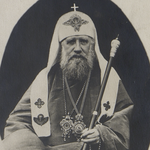 Orthodox Hierarchs in Russian Church and Secular History
E.M. Yukhimenko
Relics of Patriarch Tikhon in the Collection of the State Historical Museum
The article provides a detailed description of 19 unique items from the collections of the State Historical Museum, which are genuine relics of the Russian Orthodox Church from the early 20th century. Nine documents reflecting the work of the Local Council of 1917−1918, as well as a kukol and a staff, are associated with the name of Patriarch Tikhon (Bellavin) of Moscow and All Russia. This memorial complex is adjacent to the memorial items of two hierarchs who were close to Patriarch Tikhon in terms of their activities and church positions: Tikhon (Nikanorov), Bishop of Mozhaisk, Vicar of the Moscow Diocese, and Nestor (Anisimov), Bishop of Kamchatka.
Publishing: 28/04/2026
How to cite: Yukhimenko E.M. Relics of Patriarch Tikhon in the Collection of the State Historical Museum // Historical Courier, 2026, No. 2 (46), pp. 60−79. [Available online: http://istkurier.ru/data/2026/ISTKURIER-2026-2-04.pdf]
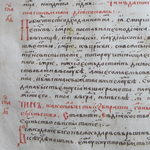 Issues in Church Governance
E.V. Belyakova
On the Specifics of the Terminology of Church Administration in Russia in the 16th Century
This article analyzes various layers of 16th century church administration terminology. Along with untranslated Greek terms denoting hierarchical ranks, there was a significant group of words corresponding to the terminology of princely administration. Particular attention is paid to the polysemantic nature of these terms. The article examines in detail the use of the word “d’yak”, which has different meanings in the same texts depending on the context in which it is used (means both, “a clerc” and “a deacon”). The author focuses on the little-studied text “The Order of Choosing the Priesthood”.
Publishing: 28/04/2026
How to cite: Belyakova E.V. On the Specifics of the Terminology of Church Administration in Russia in the 16th Century // Historical Courier, 2026, No. 2 (46), pp. 80−94. [Available online: http://istkurier.ru/data/2026/ISTKURIER-2026-2-05.pdf]
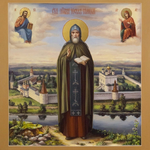 Issues in Church Governance
A.A. Manokhin
Joseph Volotsky Monastic Rule in Collections of the State Historical Museum: New Findings
The author undertook additional research into manuscripts of St. Joseph Volotsky Monastic Rule among the undescribed collections of the Manuscript Department of the State Historical Museum. This resulted in the discovery of two more manuscripts. A collation of the text of the Diocesan Collection No. 788 with the Great Menaion-Reading revealed that this is a new version of the Monastic Rule, created by a representative of the official Church at the turn of the 17th and 18th centuries. This makes research into new manuscripts, which may contain new versions of well-known medieval works, extremely promising.
Publishing: 28/04/2026
How to cite: Manokhin A.A. Joseph Volotsky Monastic Rule in Collections of the State Historical Museum: New Findings // Historical Courier, 2026, No. 2 (46), pp. 95−104. [Available online: http://istkurier.ru/data/2026/ISTKURIER-2026-2-06.pdf]
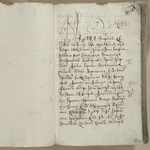 Issues in Church Governance
I.N. Shamina
On the Organization of the Census in the Monastic Estates in 1701−1703
The article examines the results of the study of the organization of census events in monastic fiefdoms in 1701−1703, carried out as part of the initial stage of Peter I’s church reform. The census books of 1701−1703 have been studied. It is shown that their compilers worked primarily with documents − census books and peasant tales; then a personal search was carried out. At the same time, the verification of the data obtained during the census turned out to be less detailed, which should be taken into account when using the census books of 1701−1703 to analyze the monastic patrimonial economy.
Publishing: 28/04/2026
How to cite: Shamina I.N. On the Organization of the Census in the Monastic Estates in 1701−1703 // Historical Courier, 2026, No. 2 (46), pp. 105−118. [Available online: http://istkurier.ru/data/2026/ISTKURIER-2026-2-07.pdf]
 Issues in Church Governance
S.A. Nikonov
Account Books of Bogoyavlensky Ukhtostrov of the 17th − First Half of the 18th Century (Composition and Features of Clerical Work of the Church Parish of the Russian North)
The article deals with the problem of the composition and peculiarities of the office management of account books of Bogoyavlenskaya Ukhtostrovskaya volost of the 17th − first third of the 18th century (Dvinsk district). The degree of preservation of sources and the order of record keeping are analyzed. The archaeographic features of the manuscripts are noted. The study of the issue makes it possible to reveal the economic activities of the parish, to establish the main sources of income and expenses, the history of the construction and repair of the church, and the features of everyday life.
Publishing: 28/04/2026
How to cite: Nikonov S.A. Account Books of Bogoyavlensky Ukhtostrov of the 17th − First Half of the 18th Century (Composition and Features of Clerical Work of the Church Parish of the Russian North) // Historical Courier, 2026, No. 2 (46), pp. 119−128. [Available online: http://istkurier.ru/data/2026/ISTKURIER-2026-2-08.pdf]
 Periodicals in the History of the Russian Orthodox Church
A.S. Khoteev
Church Periodicals on the Example of the “Polotskie Eparkhial’nye Vedomosti” (“Polotsk Diocesan Gazette”) (1874−1918): An Attempt of Source Analysis
The article provides a source study analysis of the official press organ of the Polotsk diocese (published in 1874−1918). This example demonstrates the specific nature of church publications and their informational potential. The publication is intended for researchers studying diocesan periodicals as a set of historical sources.
Publishing: 28/04/2026
How to cite: Khoteev A.S. Church Periodicals on the Example of the “Polotskie Eparkhial’nye Vedomosti” (“Polotsk Diocesan Gazette”) (1874−1918): An Attempt of Source Analysis // Historical Courier, 2026, No. 2 (46), pp. 129−140. [Available online: http://istkurier.ru/data/2026/ISTKURIER-2026-2-09.pdf]
 Periodicals in the History of the Russian Orthodox Church
I.S. Chernova
Participation of the Siberian Priest A.I. Argentov in Secular Periodicals of Siberia in the Second Half of the 19th Century
One of the influential groups actively involved in periodical publishing in the second half of the 19th century was the clergy. The aim of this article is to analyze the participation of the well-known priest, missionary, and researcher of Yakutia and Chukotka, A.I. Argentov, in secular Siberian periodicals of the second half of the 19th century. Argentov regarded periodicals as communicative platforms for conveying his ideas to readers. For a priest and missionary such as Argentov, as well as for many others, it was important to communicate the Church’s position to readers and to shape their understanding of distant borderlands and their inhabitants in a way aligned with the views of the clergy.
The article was made on the topic of the state assignment “The Past in the Manuscript Sources of the 16th−20th Centuries: Preservation and Development of Traditions” (FWZM-2024-0006).
Publishing: 28/04/2026
How to cite: Chernova I.S. Participation of the Siberian Priest A.I. Argentov in Secular Periodicals of Siberia in the Second Half of the 19th Century // Historical Courier, 2026, No. 2 (46), pp. 141−153. [Available online:http://istkurier.ru/data/2026/ISTKURIER-2026-2-10.pdf]
 Libraries and Book Collections in the History of Russian Orthodoxy
K.S. Kazakova
The Book as a Tool of Missionary and Educational Activity in the Kola North in the 19th − Early 20th Century
This article, drawing on archival materials and the collections of the Arkhangelsk and Kholmogory Diocese, examines the distribution of religious literature in the Kola North in the second half of the 19th and early 20th centuries. Important components of this process included diocesan censorship, the creation of religious literature in the language of the Sami, the indigenous people of the Kola North, and the replenishment of book collections at parish schools in the district. The spread of literature in the Kola North contributed to the inclusion of the European Arctic in the intercultural communications of imperial Russia.
The article is on the topic of the state assignment “Dynamics of the Socio-Cultural Image of the Kola North in the Context of the History of the Russian Arctic Frontier Exploration” (FMEZ-2024-0002).
Publishing: 28/04/2026
How to cite: Kazakova K.S. The Book as a Tool of Missionary and Educational Activity in the Kola North in the 19th − Early 20th Century // Historical Courier, 2026, No. 2 (46), pp. 154−166. [Available online: http://istkurier.ru/data/2026/ISTKURIER-2026-2-11.pdf]
 Libraries and Book Collections in the History of Russian Orthodoxy
P.I. Mangilev
Manuscripts and Early Printed Books in Church Collections of Yekaterinburg
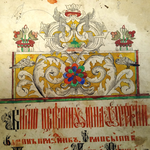
The article provides an overview of five collections of handwritten and early printed books, established in institutions and parishes of the Yekaterinburg diocese, as well as in parish churches. The book collections reviewed in the article contain 104 storage units from the 16th to 20th centuries. Among the books identified were: the didactic Gospel “without foliation” (Vilna, circa 1595), six editions of the Moscow Print Yard of the 17th century, editions of the Synodal, Edinoverie and Old Believer presses, two books of the civil press, published before 1830. Of interest is a collection of songs on hook notes, copied in Kazan between 1911 and 1914, as well as a lithographed edition of a singing alphabet book (“Azbuka solevaya”). Many of the books contain inscriptions of contributions, owners, gifts, and memorials.
Publishing: 28/04/2026
How to cite: Mangilev P.I. Manuscripts and Early Printed Books in Church Collections of Yekaterinburg // Historical Courier, 2026, No. 2 (46), pp. 167−181. [Available online: http://istkurier.ru/data/2026/ISTKURIER-2026-2-12.pdf]
 Libraries and Book Collections in the History of Russian Orthodoxy
A.A. Yudin
The Composition and Fate of the Book Collection of the Old Believers of the Belokrinitsky Concord in the Diocesan Library of Novokuznetsk
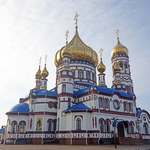
An archeographic survey of the library of the Kuzbass Orthodox Theological Seminary of the Russian Orthodox Church in Novokuznetsk allows us to reveal some books that previously belonged to Old Believers who accepted the Belokrinitskaya Hierarchy. The book collection of 20 items includes both liturgical texts and polemical and apologetic works. Many of the editions found are bibliographic rarities, some of which were published in secret Old Believer printing houses. Among the authors are famous Old Believers of the Belokrinitskaya Hierarchy such as bishops Arsenius (Shvetsov) and Innocent (Usov), F.E. Melnikov, V.M. Karlovich, V.T. Zelenkov, P.I. Vlasov.
The article was prepared according to the research plan of the SPSL SB RAS, project “Depository of Book Monuments of Siberia and the Far East: identification, Digital Storage System and Organization of Access for Research” (No. 122040600049-8).
Publishing: 28/04/2026
How to cite: Yudin А.А. The Composition and Fate of the Book Collection of the Old Believers of the Belokrinitsky Concord in the Diocesan Library of Novokuznetsk // Historical Courier, 2026, No. 2 (46), pp. 182−196. [Available online: http://istkurier.ru/data/2026/ISTKURIER-2026-2-13.pdf]
 Book Culture and the History of the Old Belief
N.S. Gurianova
Peter I and the Old Believers: Policy and Legislation
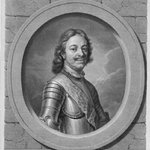
The article analyzes legislative acts from the first quarter of the 18th century that targeted the Schism (Raskol). Although the severe anti-Schismatic decrees of Tsarevna Sophia remained in effect at the start of Peter I’s reign, initial efforts focused on persuasion directed at the Old Believers. The analysis shows that secular authorities soon began to provide military support to Church representatives engaged in missionary activities within these communities. The findings indicate that Peter I’s policy toward the Old Believers was marked by contradictions, as it combined elements of legalization with increased political and economic pressure.
The article was made on the topic of the state assignment “The Past in the Manuscript Sources of the 16th−20th Centuries: Preservation and Development of Traditions” (FWZM-2024-0006).
Publishing: 28/04/2026
How to cite: Gurianova N.S. Peter I and the Old Believers: Policy and Legislation // Historical Courier, 2026, No. 2 (46), pp. 197−209. [Available online: http://istkurier.ru/data/2026/ISTKURIER-2026-2-14.pdf]
 Book Culture and the History of the Old Belief
L.V. Titova
“Prayer with a Question to the All-Holy Council” by Deacon Fyodor in the System of Proofs of the Truth of the Old Faith
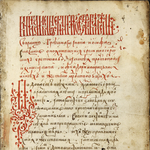
This article examines the results of an analysis of the polemical and dogmatic writings of one of the first ideologists of the early Old Believer movement, Deacon Fyodor Ivanov, and his development of the eschatological theme, which began with “Prayer with a Question to the All-Holy Council…” It is shown that in his main journalistic texts, the Orthodox Response and the Epistle to his son Maxim, developing the theme of the onset of "latter times," he uses his early texts, expanding them with plots from Russian history.
The article was made on the topic of the state assignment “The Past in the Manuscript Sources of the 16th−20th Centuries: Preservation and Development of Traditions” (FWZM-2024-0006).
Publishing: 28/04/2026
How to cite: Titova L.V. “Prayer with a Question to the All-Holy Council” by Deacon Fyodor in the System of Proofs of the Truth of the Old Faith // Historical Courier, 2026, No. 2 (46), pp. 210−217. [Available online: http://istkurier.ru/data/2026/ISTKURIER-2026-2-15.pdf]
 Book Culture and the History of the Old Belief
L.D. Demidova
“Pomoranian” Version of the Petition of Monk Avraamii
This article analyzes a previously unknown version of the Petition of the Monk Avraamii (1670), created in the mid-18th century and conventionally called “Pomorskaya”. The editor significantly expanded the polemical arguments of the early Old Believer ideologist. One of its sources was the text of the fifth Pomorskiy Otvet (“Pomorian Answer”). The general ideological concept of the work, including its eschatological teaching, remained unchanged, but the editor updated the text, directing criticism at anti-Old Believer publications, including Prashchitsa (“The Sling”) by Pitirim, metropolitan of Nizhny Novgorod and Rozysk (“Inquiry”) by Dmitry, metropolitan of Rostov. An analysis of the changes that the text has undergone, as well as the composition of the collection in which the edition is located, allows us to suggest that the author of the alteration was most likely a representative of one of the Pomor communitie.
The article was made on the topic of the state assignment “The Past in the Manuscript Sources of the 16th−20th Centuries: Preservation and Development of Traditions” (FWZM-2024-0006).
Publishing: 28/04/2026
How to cite: Demidova L.D. “Pomoranian” Version of the Petition of Monk Avraamii // Historical Courier, 2026, No. 2 (46), pp. 218−231. [Available online: http://istkurier.ru/data/2026/ISTKURIER-2026-2-16.pdf]
 Book Culture and the History of the Old Belief
A.V. Chistyakova
Letters from the Archive of the Yekaterinburg Merchant G.F. Kazantsev as a Source on the History of Government Policy Towards the Old Believers during the Reign of Emperor Nicholas I
This article examines the Old Believers’ reaction to the measures taken by the supreme authorities during the reign of Nicholas I. Examples are given of members of the industrial elite who were able to adapt to the new conditions dictated by political policy. The analysis is based on epistolary material demonstrating the real experiences of Old Believers regarding the restrictions of their religious freedom and the danger of deviating from the practices of ancient piety. The role of church leaders, who informed the authorities about the unrest that arose in society amid the religious changes taking place in the country, is emphasized.
The article was prepared as part of a project supported by the Russian Science Foundation, “Confessional Variability of Russian Orthodoxy in the 19th − Early 20th Centuries” (grant No. 25-28-02317).
Publishing: 28/04/2026
How to cite: Chistyakova А.V. Letters from the Archive of the Yekaterinburg Merchant G.F. Kazantsev as a Source on the History of Government Policy Towards the Old Believers during the Reign of Emperor Nicholas I // Historical Courier, 2026, No. 2 (46), pp. 232−245. [Available online: http://istkurier.ru/data/2026/ISTKURIER-2026-2-17.pdf]
 Book Culture and the History of the Old Belief
V.A. Esipova, E.V. Ivanovskaya, A.M. Kalabina, A.A. Shcherbinina
Archive of the Kungur Townsman Old Believer Semyon Sharapov
The article considers a set of documents belonging to Semyon Sharapov, a Kungur townsman, a wanderer, confiscated from him in 1873 in Tomsk. The purpose of the work was to identify the specifics of the texts that were part of the host of the wanderers’ repertoire of reading. The analyzed documents characterize their owner as an Old Believer wanderer who supported the protivostateyniki. At the same time, the owner was interested not only in matters of faith, but also in the problem of relations with the authorities. A selection of newspapers from 1863, kept by Sharapov, was also studied. They could be used as a positive example of the interaction of the Old Believers with the authorities. In general, the work shows that the compositions of the book collections of the head of the community of wanderers (Vikhlyaeva) and the host of the wanderers (Sharapova) differed from each other. The former was related to liturgy, while the latter demonstrated connections with the secular world.
The study was supported by the Russian Science Foundation grant No. 25-78-20009.
Publishing: 28/04/2026
How to cite: Esipova V.A., Ivanovskaya E.V., Kalabina A.M., Shcherbinina A.A. Archive of the Kungur Townsman Old Believer Semyon Sharapov // Historical Courier, 2026, No. 2 (46), pp. 246−259. [Available online: http://istkurier.ru/data/2026/ISTKURIER-2026-2-18.pdf]
 Book Culture and the History of the Old Belief
T.G. Kazantseva
Hectographed publication of the “Stichera to the Holy Right‑Believing Princess Anna of Kashin”: Historical Context, Paleographic Features, Editing of the Service
The article is dedicated to a hectographed edition of the notated service to the Holy Blessed Princess Anna of Kashin. The historical context and preconditions for the emergence of this publication are examined, its codicological characteristics are given, its musical-paleographic description is provided, and the composition and features of the editorial service published in the hectograph under study are analyzed. The publication has been attributed to one of the hectograph workshops of the Belokrinitsa Old Believers; specific editorial features that distinguish it from previously known versions have been identified. The research material is a copy from the BAN (Library of the Academy of Sciences), NIOR (Department of Manuscripts and Rare Books), Tek. post. 336.
The article was prepared according to the research plan of the SPSL SB RAS, project No. 122040600049-8 “Depository of Book Monuments of Siberia and the Far East: Identification, Digital Storage System and Organization of Access for Research”.
Publishing: 28/04/2026
How to cite: Kazantseva T.G. Hectographed publication of the “Stichera to the Holy Right‑Believing Princess Anna of Kashin”: Historical Context, Paleographic Features, Editing of the Service // Historical Courier, 2026, No. 2 (46), pp. 260−284. [Available online: http://istkurier.ru/data/2026/ISTKURIER-2026-2-19.pdf]
 The World of the Book
A.V. Mangileva
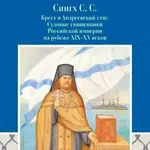
Review: Singh S.S. The Cross and the St. Andrew’s Banner. Ship Priests of the Russian Empire at the Turn of the 19th−20th Centuries. Moscow: Publishing House “Tissot”, 2025. 286 p.
The review examines the main provisions of S.S. Singh’s monograph, which is devoted to a numerically small group of clergy − naval priests. From the reviewer’s point of view, the main interest is that the study in question proves that the ship was a mini-model of Russian society at the turn of the century, and the position of the ship’s priest clearly reflected all the problems characteristic of the position of the Orthodox Church in the country at that time. The book helps to understand why the Church was unable to prevent the revolutionary events in the country.
Publishing: 28/04/2026
How to cite: Mangileva A.V. Review: Singh S.S. The Cross and the St. Andrew’s Banner. Ship Priests of the Russian Empire at the Turn of the 19th−20th Centuries. Moscow: Publishing House “Tissot”, 2025. 286 p. // Historical Courier, 2026, No. 2 (46), pp. 285−290. [Available online: http://istkurier.ru/data/2026/ISTKURIER-2026-2-20.pdf]